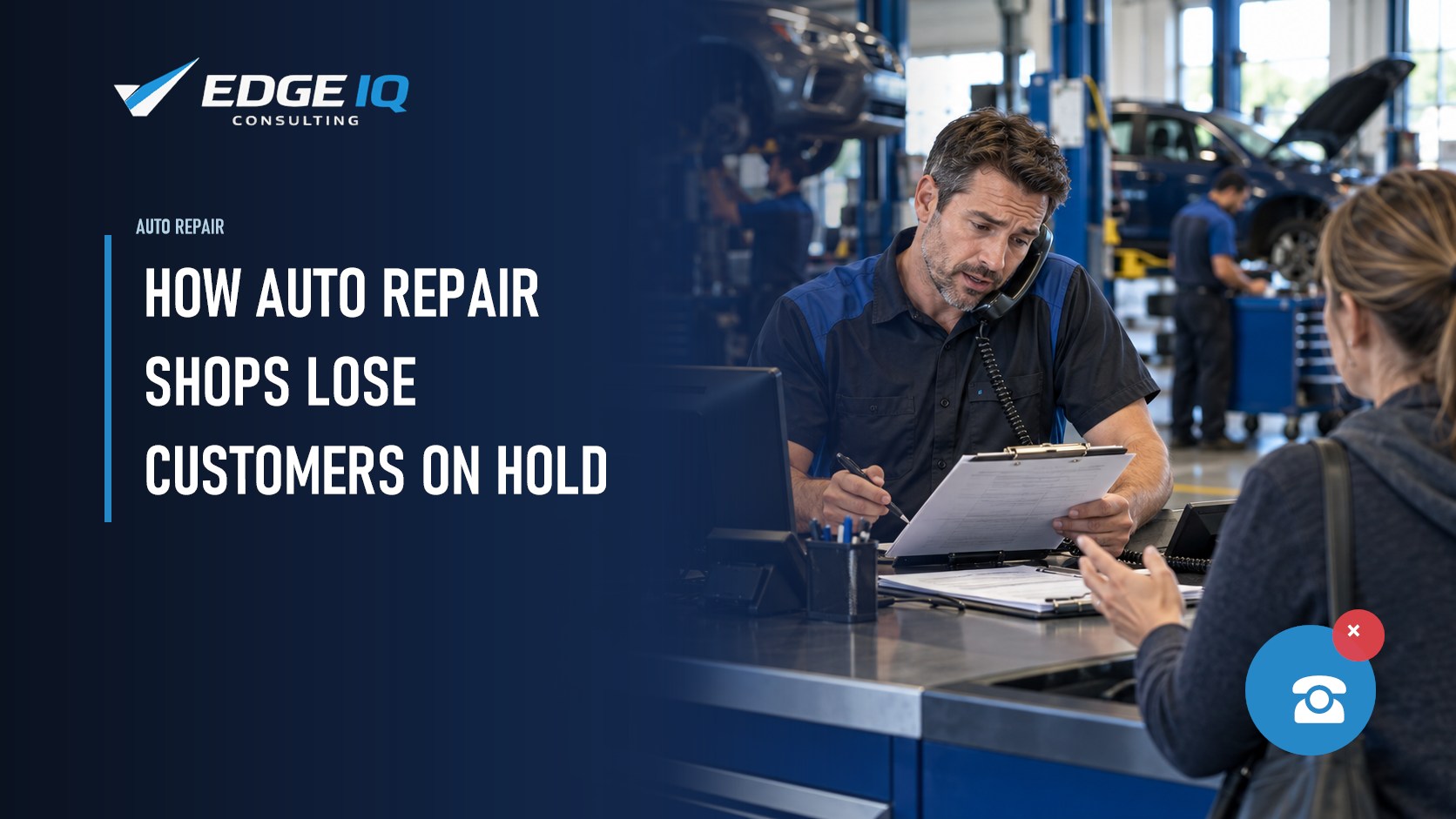
Short answer: when the bays are full and the counter is backed up, the phone does not stop ringing. A service writer may be doing everything right and still be unable to give every caller a clear next step. That is rarely an effort problem. It is a front-desk capacity and handoff issue, and a governed AI answering workflow can capture the request so your team can follow up.
The front-desk bottleneck
A service writer may be checking in customers, building estimates, updating technicians, calling parts suppliers, and answering the phone. When the bays are full and the counter has a line, calls compete with work already in motion. Callers may be placed on hold, hear a busy signal, or reach voicemail. The need is not to work harder. It is a consistent way to capture the request and hand it off when the desk is at capacity.
People do not always wait on hold
For routine work like oil changes, brakes, check-engine lights, or no-start issues, some callers are comparing options. If they do not get a clear next step, they may call the next shop in the search results. After hours, a 6:30 p.m. breakdown caller may simply need to know whether the shop handles that type of issue, what information to provide, and how to request a follow-up the next business day.
What an AI answering workflow can do
The goal is simple: capture the request, collect the right details, and give your team a clean handoff. An AI answering workflow can answer in your shop’s name, use approved responses for common questions, and collect:
- Caller name and callback number.
- Vehicle year, make, and model.
- Reason for the call, including any stated urgency.
- Whether the caller needs service, an estimate, or a status update.
- A clear handoff to the appropriate person or process.
It can capture the booking request and schedule only when the shop has approved calendar access and scheduling rules.
What it does not do without a person
The owner or manager still defines accepted services, service area, hours, escalation rules, and approved responses. A person still owns exceptions, pricing questions, complex vehicle situations, and follow-up with callers.
What to measure
Track a few practical numbers before and after the workflow is in place:
- After-hours voicemail rate.
- Percentage of inbound callers contacted within 10 minutes.
- Calls logged but never contacted.
- Percentage of qualified callers scheduled through the approved process.
These measures show where the handoff is breaking down and where the front desk needs support.
Hear it as your front desk
Edge IQ Consulting builds and manages the answering workflow around your shop’s services, hours, and scheduling process. Want to hear how this could sound for your shop? Call the demo line at (918) 530-3216.
Hear it first, then map your call flow.