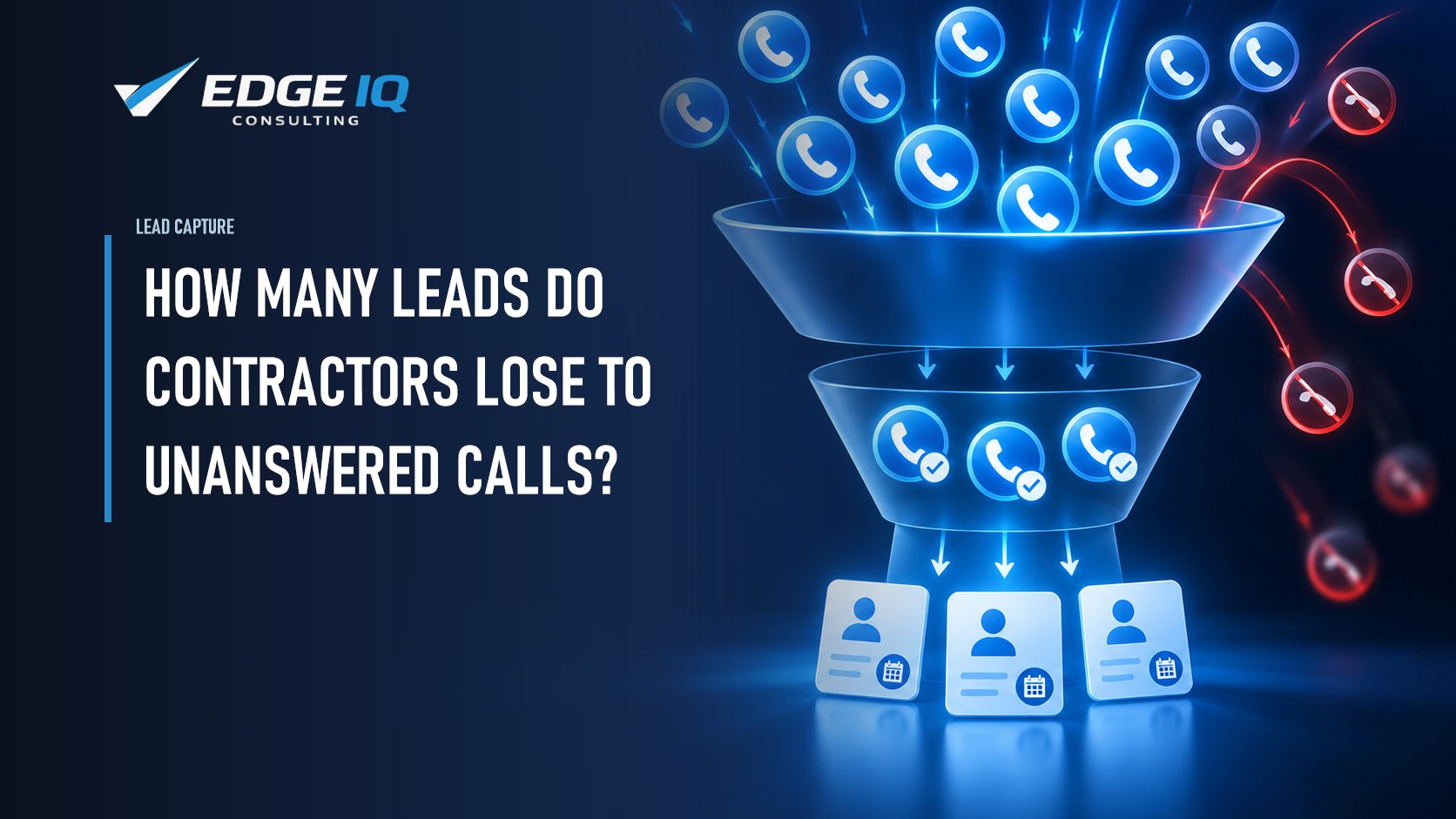
Short answer: the number that matters is not a national average. It is how many calls your business fails to answer, qualify, and follow up on each week. Contractors usually do not lose leads from carelessness; they lose them when calls land during jobs, after hours, weekends, storms, or busy office windows and nobody owns the next step fast enough.
Why missed calls happen in trades businesses
The phone is often the first serious buying signal. A homeowner has a leak, no heat, a clogged line, storm damage, or an urgent repair. If no one answers, many will not wait around. They try the next contractor who can respond. That is not a criticism of your team. It is a capacity and handoff problem.
Estimate your own missed-call number
You do not need a broad industry statistic. Start with your own call log, call-tracking report, or phone-system dashboard:
- Count inbound calls for a normal week.
- Mark the calls that went unanswered, hit voicemail, or were returned too late.
- Separate the calls that came during jobs, after hours, weekends, or peak office windows.
- Identify which missed calls looked like real service opportunities, not spam, vendors, or wrong-fit requests.
- Review where those calls came from, especially Google Business Profile, Local Services Ads, referrals, website forms, and paid campaigns.
This will not give you a perfect number. It will give you a practical one your team can improve. And if you are paying to make the phone ring, missed calls are not just an operations issue. They are a follow-up issue tied directly to your marketing.
What to measure each month
- Unanswered-call rate.
- After-hours voicemail rate.
- Percentage of new calls responded to within 10 minutes.
- Calls logged but never contacted.
- Qualified calls scheduled.
These measures show where the breakdown occurs: missed calls, slow callback time, or incomplete details that keep the office from following up. Each problem needs a different response.
How an AI answering workflow reduces the gap
An AI answering workflow helps reduce missed opportunities by answering live, capturing the reason for the call, qualifying the request, texting the lead, and routing the next step to your team. For roofers, HVAC companies, plumbers, and other service contractors, the goal is not to replace human judgment. The goal is to make sure real calls are captured before they disappear. See how it is structured for roofers, HVAC companies, and plumbers.
Where your team stays in control
Your team still sets the rules. You decide which calls should be booked, which should be escalated, which should be filtered out, and who owns exceptions. Pricing questions, complex jobs, complaints, and unusual requests still need a person’s judgment. A person owns those exceptions and the follow-up, and the workflow should support that judgment, not pretend to replace it.
Hear it first, then map your call flow.