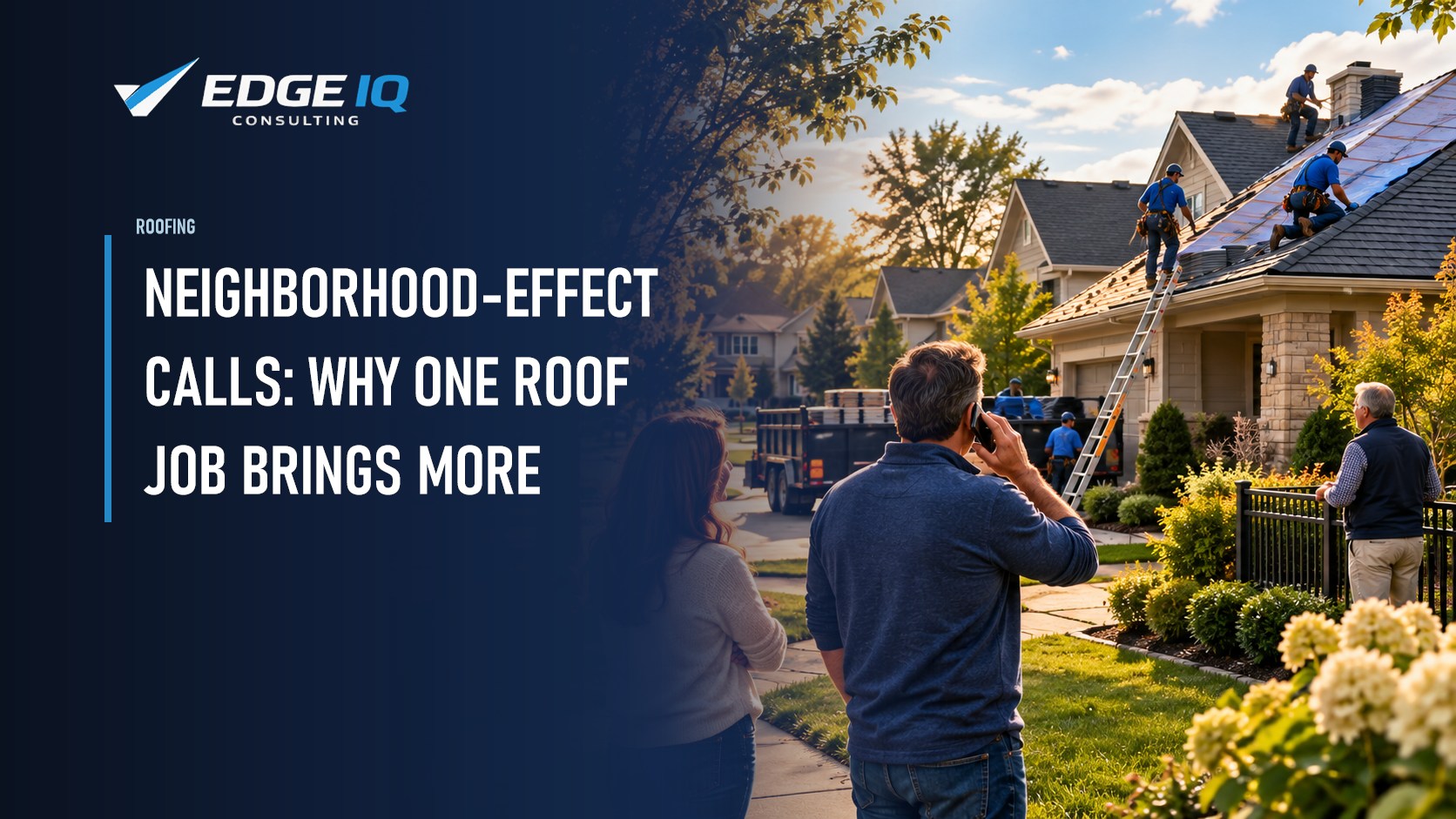
A roofing crew is working on a home after a storm. Neighbors see the trucks, materials, and activity. Some may be checking their own roof, wondering whether the damage is similar, or looking for a local inspection. If they call while your crew is on the roof and the office is busy, the call may go to voicemail or ring out. By the time someone returns it, the neighbor may have contacted another company.
One job can create nearby interest
Roofing work is visible. A crew on a street gives nearby homeowners a reason to ask questions they may have been putting off: Do I have damage? Can someone inspect my roof? Are you already working in this area?
After a storm affects multiple homes, those calls may come close together. A job on one property can lead to inspection requests from other homes on the same street or nearby.
The challenge is handling the call at the right time
Your crew’s priority is the work in front of them. During storm activity, your office may also be handling active customers, scheduling inspections, and coordinating crews.
The workflow gap appears when a new caller reaches out and no one is available to answer. The business needs a consistent way to receive the request, collect the right details, and make sure the right person follows up.
What an answering workflow can do
A governed answering workflow can greet the caller in your company’s name, collect their contact information and address, ask approved questions about the request, and capture interest in an inspection or callback.
It can send the call details to the person or system you designate. That gives your team a clearer handoff while the crew remains focused on the job site. Edge IQ Consulting sets up and manages a 24/7 answering workflow for roofers.
What it will not do without a person
The workflow should not inspect a roof, determine whether damage is covered, promise availability, provide a final scope, or quote the work. It should not make commitments outside the rules you have approved.
Your team still decides whether and when to inspect, how to prioritize storm-related requests, what work is needed, and what to quote. The workflow handles the initial contact and documents the request for follow-up.
Keep the process governed
You approve the greeting, the questions asked, the information callers can receive, and the situations that need immediate escalation. You decide where leads are sent, who owns follow-up, and how quickly the team should respond.
What to measure
- Neighbor calls received while crews are on site.
- Calls that ring out or reach voicemail.
- Inspection requests captured from nearby addresses.
- Time from first call to team follow-up.
- Inspections and jobs booked on the same street or in the surrounding area.
- Requests that were incomplete, misrouted, or not followed up.
Hear the workflow in context
Call the demo line at (918) 530-3216 to hear a representative roofing inquiry. Then book the 15-Minute AI Fit Check and Answering Service Demo to review your current call process, lead routing, and escalation rules before deciding whether the workflow fits your business.
Hear it first, then map your call flow.