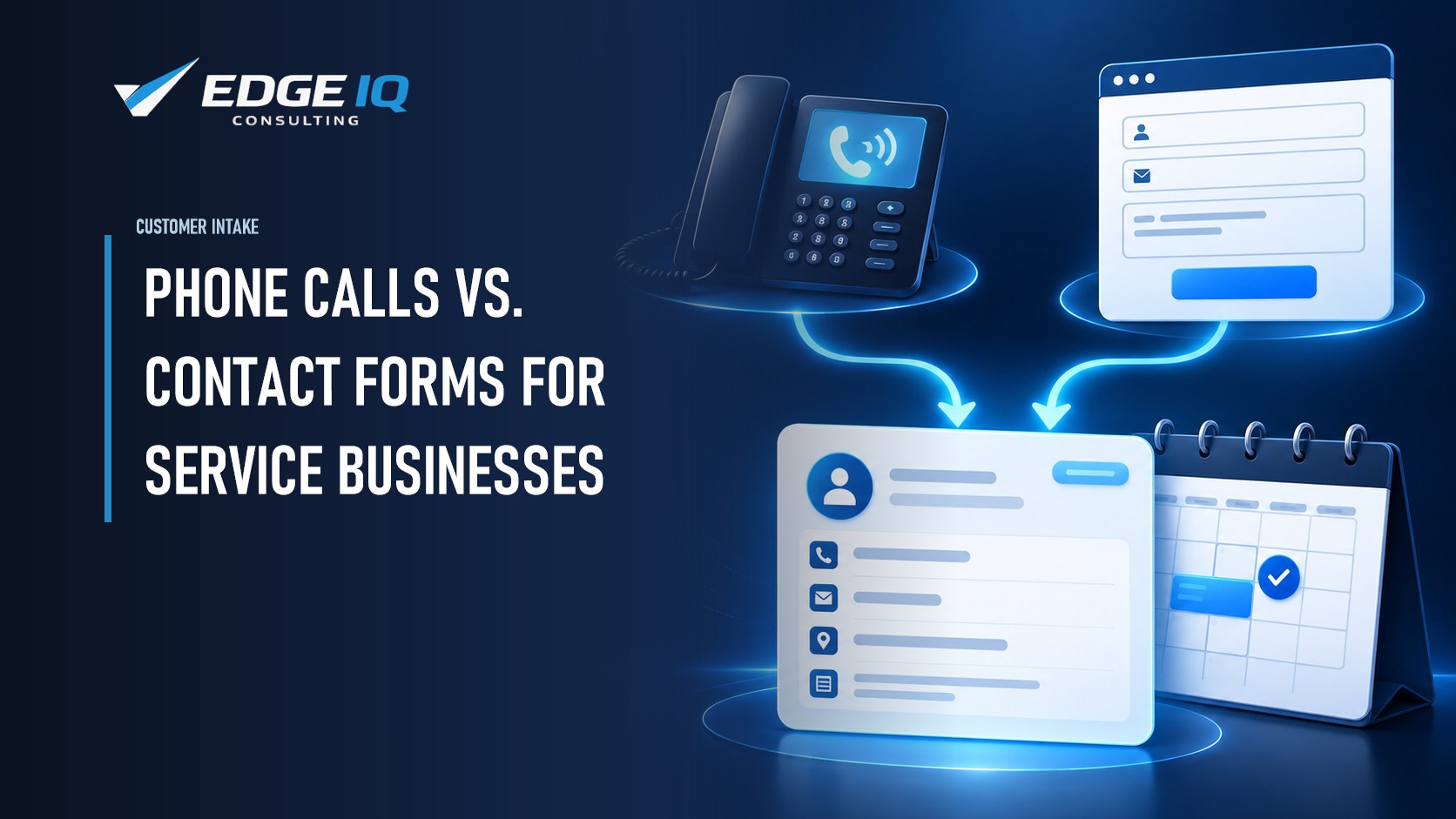
A homeowner with a leaking pipe, a failed air conditioner, or a roofing concern may call because they want to speak with someone now. They may have questions, need to explain what is happening, or want to know what the next step looks like.
A web form can still be useful, especially for routine requests or after-hours inquiries. But it creates a different handoff: the customer submits information and waits for your team to respond.
Calls and forms serve different moments
A phone call allows the customer to explain the situation in their own words and receive an immediate first response. It can be a practical channel when the request feels urgent, unclear, or difficult to describe in a short form.
A form gives the customer a way to contact you when calling is inconvenient. It can collect basic details and create a record for follow-up. Both channels have a role, but they require different workflows.
A form depends on the follow-up process
When a form is submitted, the next step depends on someone seeing it, reviewing the request, and responding. If that process is delayed or unclear, the customer may contact another provider before your team reaches them.
With a call, the same risk exists if no one can answer. The important question is not which channel is universally better. It is whether each channel has a clear, consistent path from initial contact to team follow-up.
What an answering workflow can do
A governed answering workflow can greet callers in your company’s name, ask approved questions, capture the service request, and route the information to the appropriate person or system.
For a home-service business, that may include the caller’s contact information, address, reason for the call, urgency, and preferred follow-up method. It gives the caller a defined first step when your team is unavailable.
What it will not do without a person
The workflow should not diagnose the issue, provide final pricing, guarantee a service time, approve exceptions, or make commitments outside your established policies.
Your team still determines how to handle the work, whether the request requires immediate attention, when to schedule it, and what to quote. The workflow supports the first contact and documents the request for a usable handoff.
Keep the process governed
You decide what the workflow says, which questions it asks, what information it may provide, and when it must transfer or escalate to a person. You also determine how calls and form submissions enter your systems and who is accountable for follow-up.
Edge IQ Consulting helps home-service businesses design phone-answering workflows for roofers, HVAC companies, and plumbers that fit alongside their existing website forms, scheduling process, and service policies.
What to measure
- Calls answered or captured versus calls that ring out or reach voicemail.
- Form submissions received and time to first response.
- Percentage of callers and form submitters reached by your team.
- Estimate, inspection, and service requests by channel.
- Requests that are incomplete, misrouted, or unresolved.
- Booked work that can be connected to calls and form submissions.
Hear the workflow in context
Call the demo line at (918) 530-3216 to hear how a caller is greeted and captured. Then book the 15-Minute AI Fit Check and Answering Service Demo to review how calls and forms enter your process today before deciding whether it fits your business.
Hear it first, then map your call flow.