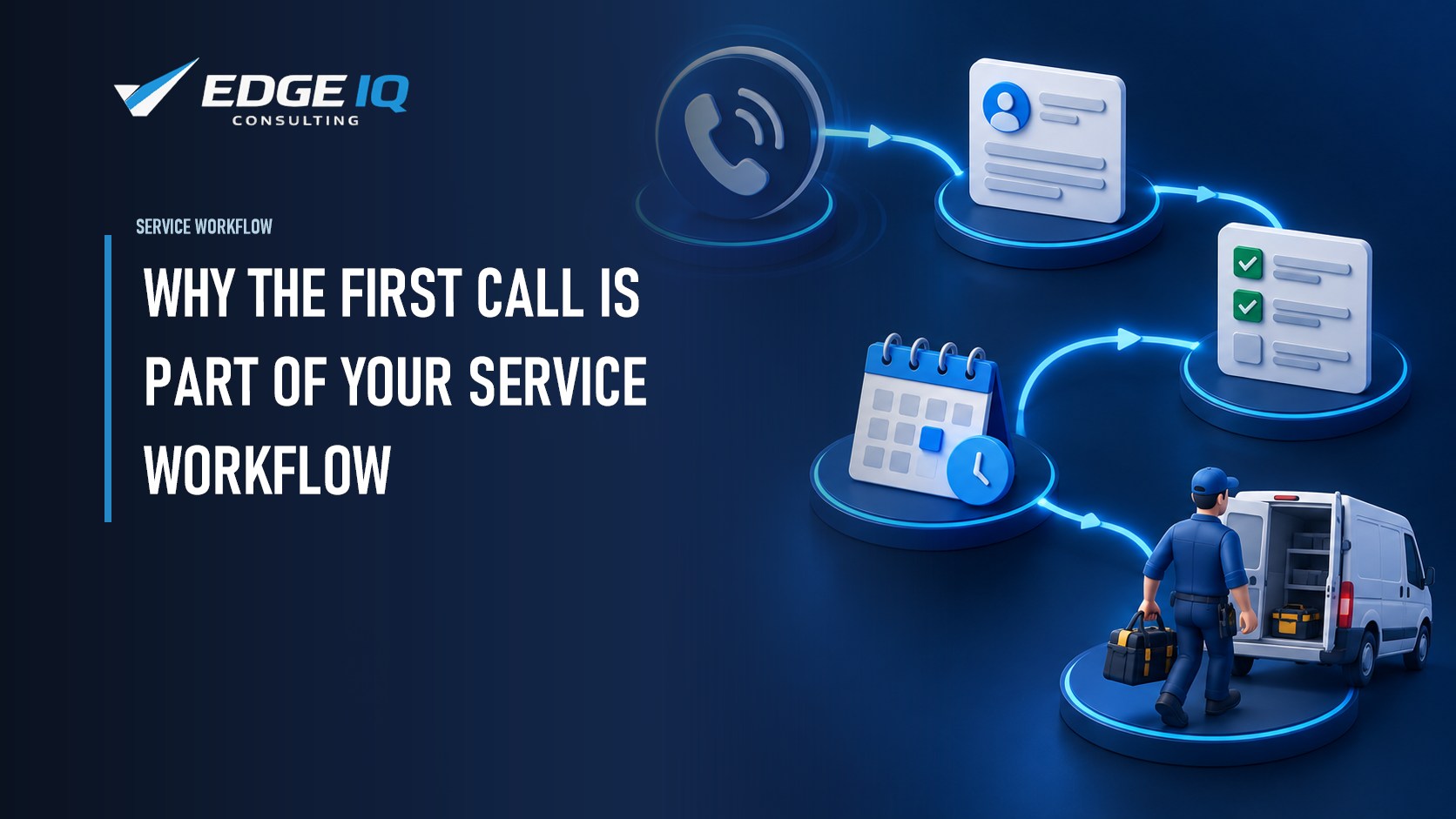
A homeowner calls to ask about a repair, request an estimate, or schedule service. That call is often the point where general interest becomes a real request your team can act on.
If the caller reaches a clear first response, their information can be collected and handed to the right person. If the call rings out or goes to voicemail, the request may be delayed or lost before your team has a chance to discuss the work.
The phone is part of the service-request workflow
Marketing, referrals, yard signs, and repeat customers may all generate calls. The phone process determines what happens next.
For a home-service business, a good first call does not need to close every job. It needs to greet the caller, understand the reason for the call, collect the necessary details, and give the team a reliable handoff for follow-up.
Consistency matters when the team is busy
Field teams cannot always answer a phone while they are driving, working on a job, or serving another customer. Office staff may also be handling scheduling, dispatch, payments, and active customer needs.
The workflow question is straightforward: when a new call comes in and no person is available, how is the request received and routed?
A consistent process helps prevent service inquiries from depending entirely on who happens to be free at that moment.
What an answering workflow can do
A governed answering workflow can answer in your company’s name, use the questions and information you approve, and capture the caller’s contact details and service need.
It can record an estimate request, inspection request, or scheduling inquiry and send that information to the person or system you designate. This gives your team a structured starting point when they return the call.
What it will not do without a person
The workflow does not replace the person who evaluates the work. It should not diagnose a problem, provide a final quote, commit to a schedule outside your rules, or make a promise that your team has not approved.
Your team still handles the estimate, determines the scope, confirms scheduling, and builds the customer relationship. The workflow supports the first contact and handoff.
Keep the process governed
You approve the greeting, the questions, the services discussed, the information provided, the escalation rules, and the lead-routing process. You decide which calls should be transferred immediately and which requests should be sent for follow-up.
Edge IQ Consulting helps home-service businesses set up AI phone-answering workflows for roofers, HVAC companies, and plumbers that align with their actual systems, service policies, and team responsibilities.
What to measure
- Percentage of new service calls answered or captured.
- Calls that ring out or reach voicemail.
- Time from first call to follow-up.
- Estimate, inspection, and service requests captured by phone.
- Requests that are incomplete, misrouted, or unresolved.
- Booked work and revenue that can be connected to phone leads.
Hear the workflow in context
Call the demo line at (918) 530-3216 to hear how a first call is greeted and captured. Then book the 15-Minute AI Fit Check and Answering Service Demo to review your current call process, systems, and policies before deciding whether it fits your business.
Hear it first, then map your call flow.