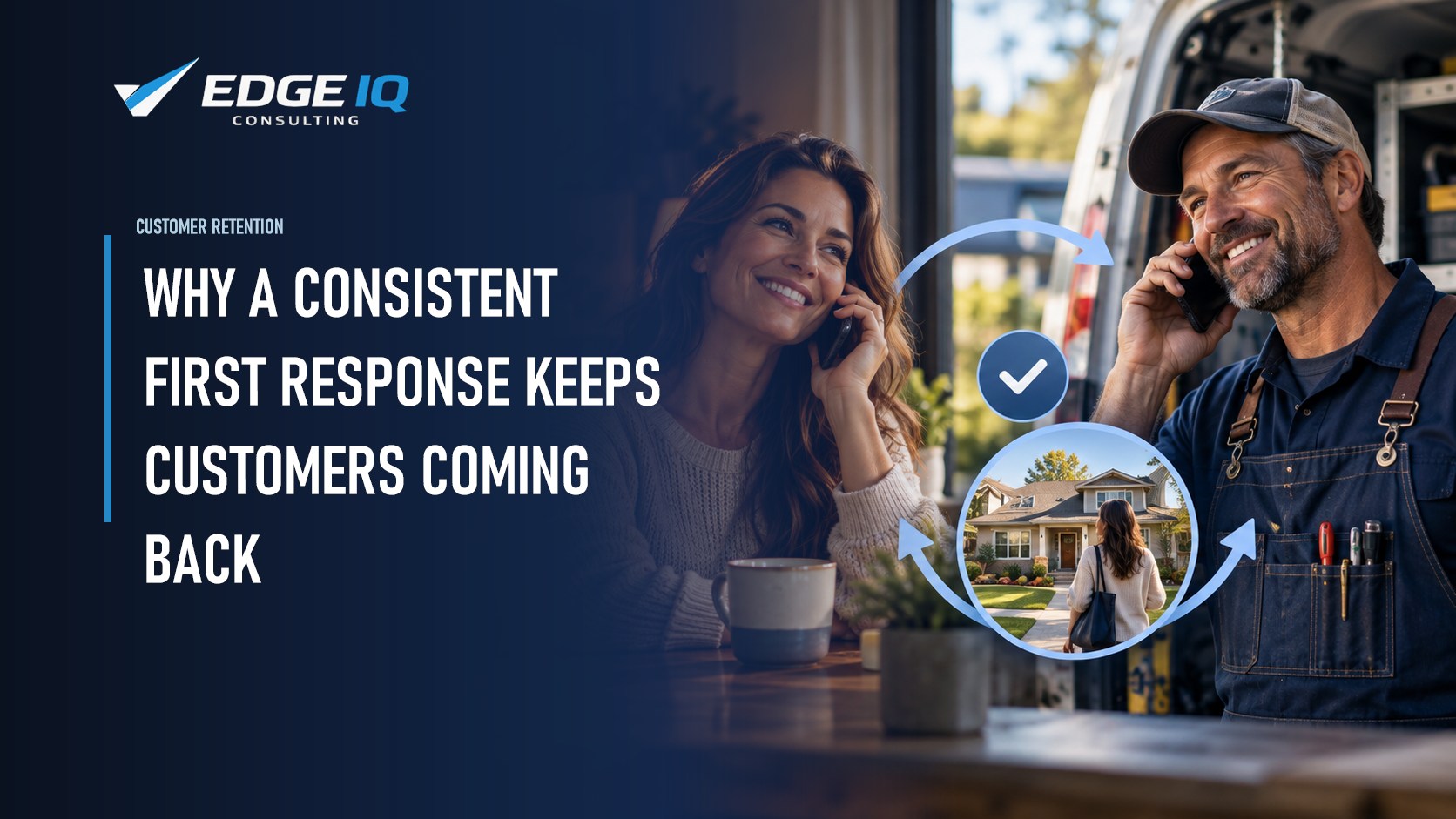
A customer calls when they need a repair, an estimate, or an answer before deciding what to do next. If no one can take the call, they may leave a voicemail, try another provider, or put the work off. The immediate request can be lost, but the experience may also affect who they contact first the next time they need service.
Call experience shapes the next call
Customers often return to businesses that were straightforward to reach when they needed help. Property managers, homeowners, and repeat service customers may not remember every detail of a prior job, but they often remember whether they received a timely response.
When a caller reaches a helpful first point of contact, they have a clearer path to the next step. Over time, that consistency can support repeat calls and referrals.
Missed calls create uncertainty
A ring-out, voicemail, or delayed callback does not mean your team is not doing its job. In home services, people are often in the field, with another customer, driving, or handling urgent work.
The operational question is what happens when the phone rings and no one is available. If there is no consistent way to greet the caller, gather the request, and hand it off, the customer may look for help elsewhere before your team has an opportunity to respond.
Build a consistent first response
A governed answering workflow can provide a consistent greeting in your company’s name, ask the questions you approve, and capture the information needed for follow-up.
For a roofer, HVAC company, or plumber, that may include the caller’s contact details, service address, reason for the call, urgency, and preferred time to hear back. The goal is not to force every call through the same script. It is to make sure callers have a clear first step when your team cannot answer directly.
What it will not do without a person
The workflow should not replace your team’s judgment. It should not diagnose an issue, set pricing, promise a specific arrival time, approve exceptions, or make a commitment outside the rules you have established.
Your team still decides how to handle the work, when to schedule it, what to quote, and how to manage the customer relationship. The answering workflow handles the initial contact and gives your team a more complete handoff.
Keep the process governed
You decide the greeting, the questions asked, the information the workflow can provide, and the situations that need immediate escalation to a person. You also determine how call details are delivered and who is responsible for follow-up.
Edge IQ Consulting helps home-service businesses set up AI phone-answering workflows for roofers, HVAC companies, and plumbers around their actual call process, systems, and policies.
What to measure
- Calls that ring out or go to voicemail.
- Time from first call to team response.
- New requests captured when the team is unavailable.
- Repeat callers and repeat customers.
- Referrals that can be connected to prior service.
- Incomplete, misrouted, or unresolved call requests.
Hear the workflow in context
Call the demo line at (918) 530-3216 to hear a representative caller experience. Then book the 15-Minute AI Fit Check and Answering Service Demo to review your current call process, escalation rules, and systems before deciding whether it fits your business.
Hear it first, then map your call flow.