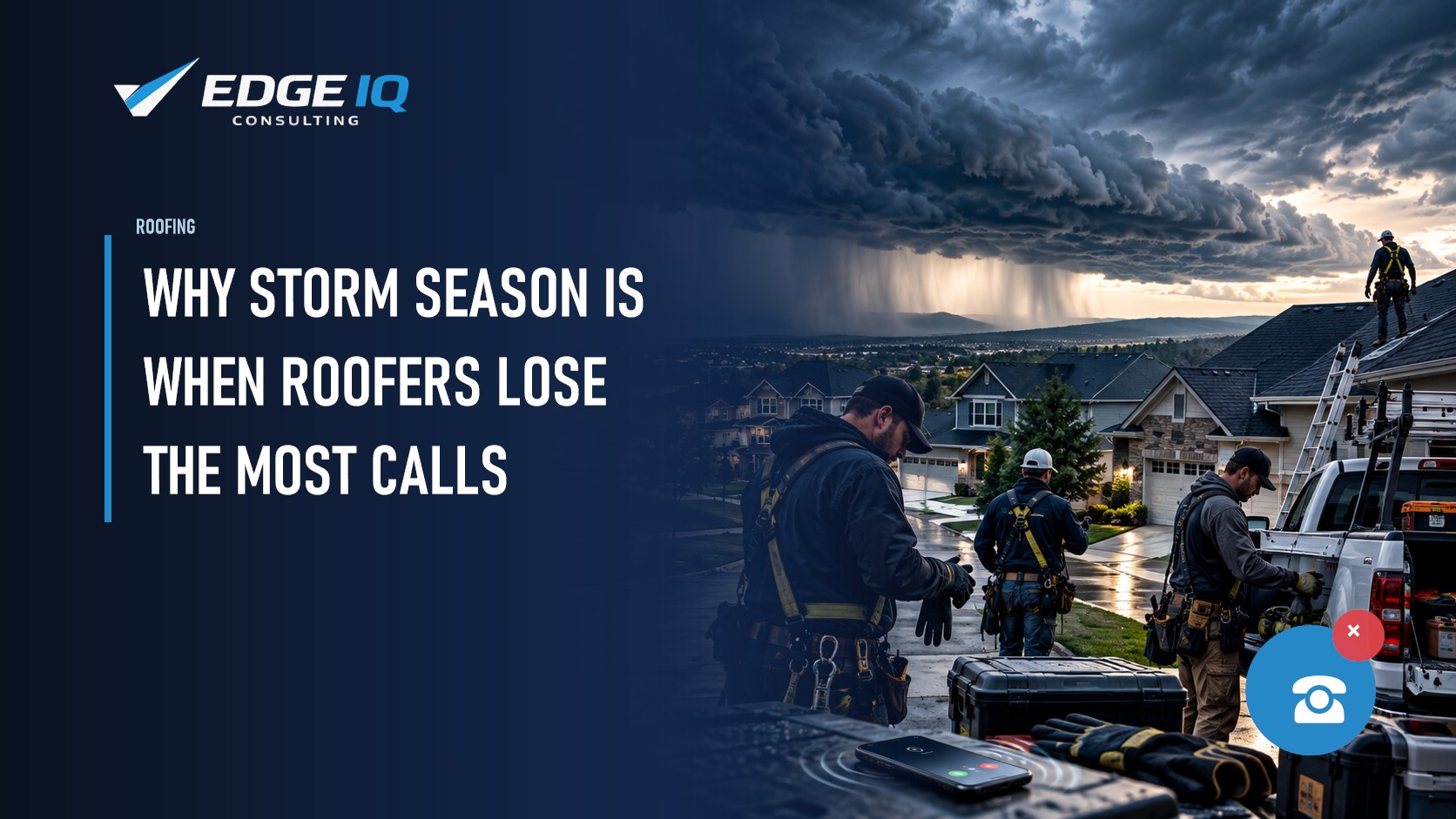
A storm moves through an area, and homeowners begin calling roofing companies to ask about damage, inspections, and next steps. Those calls often arrive while your crews are already inspecting properties, responding to active customers, or traveling between job sites.
The volume can change quickly. A call process that works during a normal week may be strained during the first day or two after a significant storm.
Storm demand arrives in a short window
Storm-related demand is difficult to predict precisely and difficult to staff for in advance. A roofing company may not need additional phone coverage every day, but it may need it when many homeowners in the same area are calling within a few hours.
At the same time, the people best able to assess the work are often already in the field. The operational need is a dependable way to receive new requests without pulling crews away from inspections or existing jobs.
The first response still matters
A homeowner may call because they are uncertain whether their roof was damaged, need to document a concern, or want to arrange an inspection. They may call several companies if they cannot reach someone.
A prompt, clear first response does not require an immediate inspection appointment or a promise about the work. It gives the caller confirmation that their request was received and establishes a defined next step for follow-up.
What an answering workflow can do
A governed answering workflow can greet storm-related callers in your company’s name, collect the contact information and property address, and ask the intake questions you approve.
It can capture the reported concern, note the caller’s request for an inspection or callback, and send the information to the person or system you designate. This creates a more usable queue of requests while your team prioritizes field activity.
What it will not do without a person
The workflow should not determine whether a roof has storm damage, interpret insurance coverage, promise inspection times outside your scheduling rules, provide a final scope, or quote the work.
A person still evaluates the roof, decides which requests need priority, sets the inspection schedule, defines the scope, and manages the customer relationship. The workflow supports the initial contact and handoff.
Keep the process governed
You determine the service area, the questions asked, the information callers may receive, the escalation rules, and who is notified when a storm-related request is received. You also decide how requests are prioritized and documented in your existing systems.
Edge IQ Consulting helps roofers, HVAC companies, and plumbers set up AI phone-answering workflows that align with their storm-response process, team capacity, and service policies.
What to measure
- Calls that ring out or reach voicemail.
- Storm-related requests captured by phone.
- Time from first call to team follow-up.
- Calls logged but not contacted.
- Percentage of qualified storm requests that receive an inspection.
- Incomplete, misrouted, or unresolved requests.
Hear the workflow in context
Call the demo line at (918) 530-3216 to hear how a storm-damage call is greeted and captured. Then book the 15-Minute AI Fit Check and Answering Service Demo to review your storm-response process and have your line ready before the next front rolls through.
Hear it first, then map your call flow.