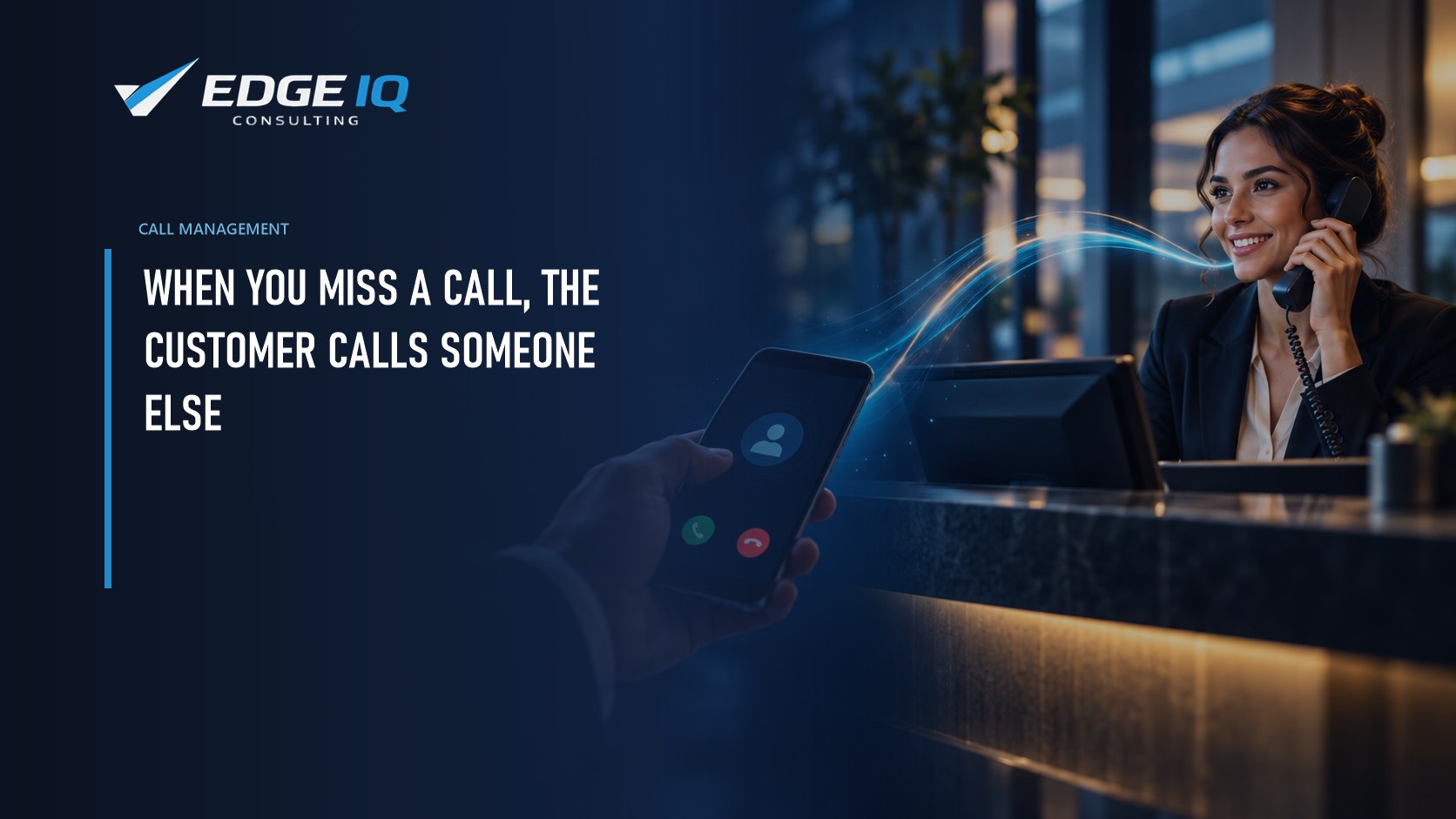
Short answer: a missed call is rarely a neutral loss. The customer still has a need, so most of the time they call the next business on their list, and that business gets the job and often the repeat work that follows. So a missed call is not only revenue you did not get; it is a customer who found help somewhere else. The useful takeaway is simpler than any scare tactic: being reachable is a steady advantage, and it is one you can set up.
A missed call goes somewhere
It is tempting to treat a missed call as money that simply did not happen. But the customer still has a problem to solve, so they tend to keep dialing until someone picks up. That job, and what it leads to, usually lands with whoever answered. The call did not disappear; it moved on. A voicemail box that callers skip does not hold the lead for you.
What a missed call can cost
- The job itself, the immediate work and revenue.
- The repeat work, if that customer settles in with whoever helped first.
- The referrals, which tend to follow the business that showed up when needed.
None of this requires the other business to be better. Over a year of missed calls, the steady leak adds up, and it is avoidable.
Reachability is a durable advantage
Here is the part worth sitting with: the business that gets the call does not have to be more skilled, cheaper, or better reviewed. It just has to be reachable at the moment the customer calls. You can do excellent work and still lose calls simply because the phone was not covered. In a market where plenty of businesses let calls ring out, being reliably reachable is one of the more practical edges available.
Be the business that answers
A governed answering workflow helps you be the one that picks up, so the calls that come in during busy days and after hours get a response and the lead is captured instead of lost to voicemail. Rather than letting those callers drift elsewhere, you give them a clear first answer and a next step. Edge IQ Consulting sets it up for roofers, HVAC companies, and plumbers.
What it will not do without a person
The workflow answers and captures the lead under your rules and routes what needs a person. It should not quote the work, promise a specific time outside your rules, or commit an appointment until a person or your scheduling system confirms it. You set the questions and the escalation path. A person still owns the quote, the work, and the customer.
What to measure
- Your unanswered-call rate, especially after hours and during overflow.
- Calls captured that used to ring out.
- New customers reached during hours you could not answer before.
- Booking rate on calls answered live.
Be the one who answers
Call the demo line at (918) 530-3216, then book the fit check and we will set up a line that answers when otherwise a call would be missed.
Hear it first, then map your call flow.