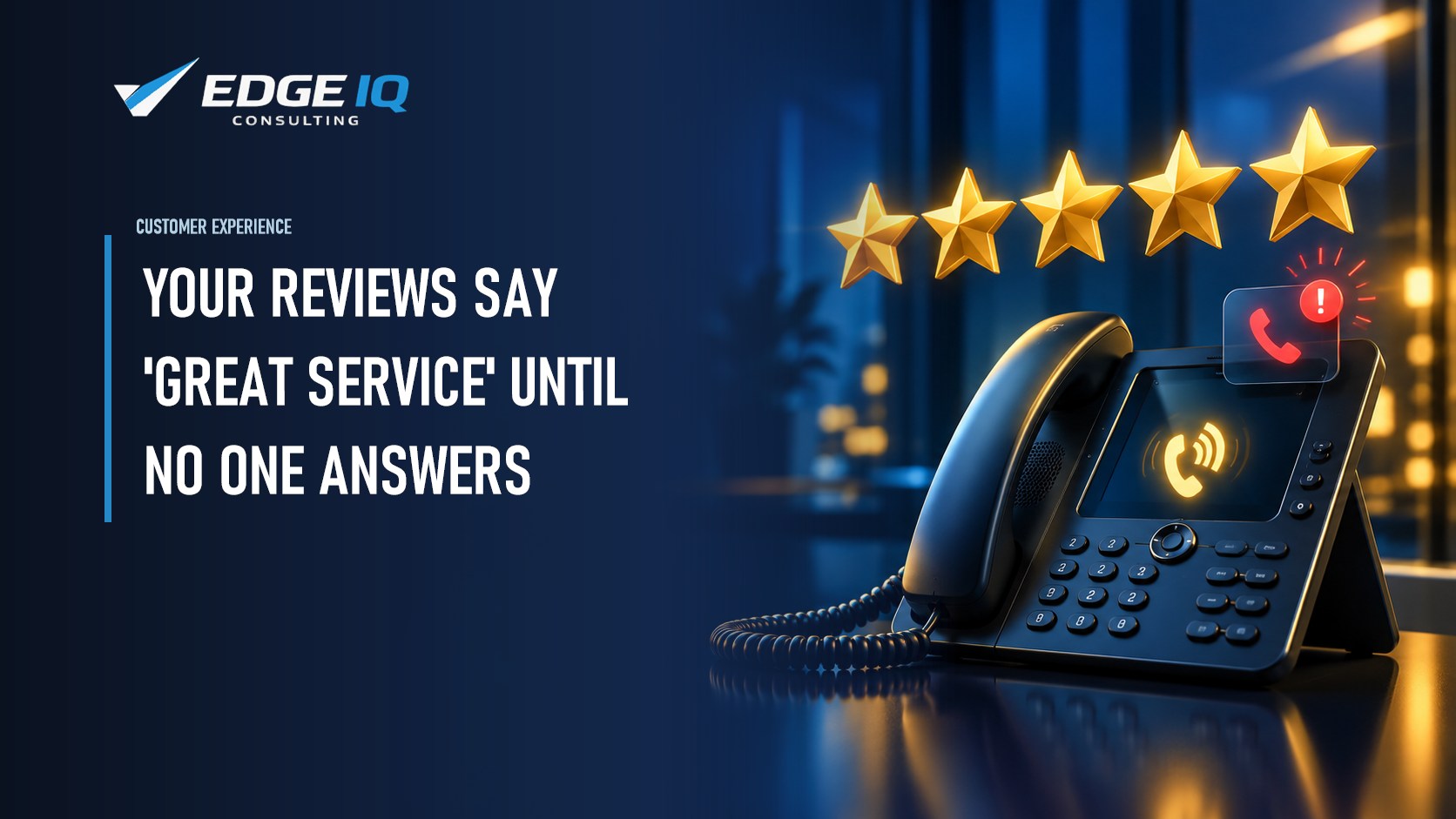
A customer searches for a local service business, reads the reviews, and decides to call. The reviews may have created enough confidence for that first contact. The call is where the customer learns what it is like to deal with the business directly.
If no one answers, the customer may leave a message, call again later, or contact another provider. If there is no follow-up, the experience may become part of what they remember about the business.
Reviews create interest; the call tests the experience
Strong reviews help customers narrow their choices. They often lead to calls for estimates, repairs, scheduling, or basic questions.
But a review does not answer the phone. When the caller reaches voicemail or receives no response, the business has a gap between the reputation shown online and the experience the caller receives.
A consistent first response helps connect those two parts of the customer journey.
Unanswered calls can become feedback
Customers sometimes leave reviews about call handling rather than the quality of the work. Comments such as “I called twice and did not hear back” can be difficult to address because they describe an experience before any service was provided.
A response to the review may show that the business takes the concern seriously, but it does not change the caller’s initial experience. A defined call-handling and follow-up process is the more practical place to address the issue.
What an answering workflow can do
A governed answering workflow can answer in your company’s name, collect the caller’s contact details and reason for calling, and send the request to your team for follow-up.
It can help provide a consistent first response during busy periods, after hours, or when several calls arrive at once. It can also send a review request after a completed job if you choose to use that process and approve the message, timing, and recipient rules.
A review request should follow actual completed work and your normal customer-service process. It should not be used to screen out feedback or pressure customers to leave a particular type of review.
What it will not do without a person
The workflow should not resolve a complaint, respond to a public review, diagnose a service issue, make a final pricing decision, or manage a sensitive customer situation without human involvement.
Your team remains responsible for the quality of the work, customer follow-up, issue resolution, and the relationship that leads to an honest review. The workflow supports the initial contact and approved follow-up steps.
Keep the process governed
You decide the greeting, intake questions, information the workflow may provide, escalation rules, and who receives new requests. If review requests are included, you approve the message, timing, frequency, and any exclusions based on your customer policies.
The process should reflect how your business actually handles service and concerns. It should not promise a response or outcome your team cannot deliver.
What to measure
- Calls from your Google Business Profile or other review platforms.
- Calls that ring out or reach voicemail.
- Time from initial call to team follow-up.
- Reviews mentioning unanswered calls, delayed responses, or lack of follow-up.
- Review requests sent after completed work.
- Review themes and rating trends over time.
Hear the workflow in context
Edge IQ Consulting sets up and manages the answering workflow for roofers, HVAC companies, and plumbers. Call the demo line at (918) 530-3216 to hear the first impression a caller would get, then book the 15-Minute AI Fit Check and Answering Service Demo to review how calls from your reviews are handled today.
Hear it first, then map your call flow.